
Arizona Students with Disabilities Have Everything to Gain
Guest Column Writer

Karla Phillips-Krivickas is the co-founder and Chief Strategy Officer of Champions for Kids and the Arizona Inclusion Network. She is one of the nation’s foremost thought leaders on education policy and reform. Karla uses her decades of experience in state and federal policy to passionately advocate for all students—especially those with disabilities.
Key Takeaway: We want all Arizona students to grow into healthy, successful adults–and we know that higher education improves their chances. But for many students with disabilities–including my own two kids–higher education is laced with seemingly insurmountable obstacles.
Arizona can and must help. With just a few strategic changes, state policymakers and education leaders can change the game for learners with disabilities and increase college attainment and opportunities for these valuable individuals.
Higher Education’s Benefits Are for All
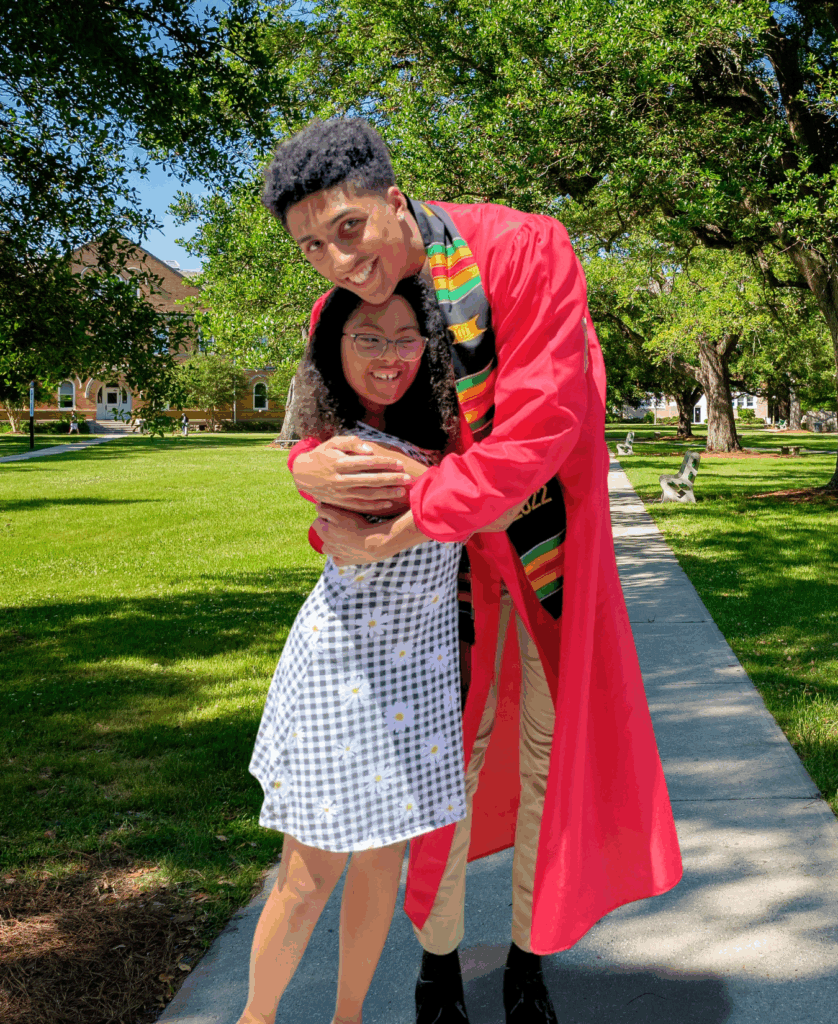
I am the proud mother of a 21-year-old son and an 18-year daughter, both with disabilities. And I want my children to enjoy the lifelong benefits of higher education, just as you likely want the same for the kids in your life. Higher education correlates with higher lifetime earnings, better health, and increased economic opportunities for individuals and their communities – for people with disabilities and those without.1
These benefits are why Arizona aims to reach 60% education attainment by 2030–meaning three out of every five working adults will hold a certificate, license, or degree. Engaging individuals with disabilities will be essential to reach this ambitious goal.
- Economic Impact: Recent research from the Helios Education Foundation and Education Forward Arizona shows that increasing higher education enrollment by just 20% per cohort could lead to more than $5 billion in economic gains for Arizona each year. 2
- By the Numbers: One in five U.S. undergraduates have a disability.¹ Yet disabled adults are half as likely to hold a bachelor’s degree as their peers.3
Facing the Achievement Gaps
Unfortunately, Arizona has a long way to go. Not only do students with disabilities consistently score significantly lower in all subjects and grades of the Nation’s Report card, they also graduate at alarmingly lower rates compared to their peers (71% compared to 87% nationally).4
And smooth sailing isn’t guaranteed after high school graduation either. Consider the gaps between Arizona high school graduates with and without disabilities–and their lifelong implications:
- Postsecondary Attainment: Only 21% of Arizona’s high school graduates with disabilities enrolled in some form of postsecondary education within one year of graduation, compared to 48% of all students. (This is up from 19% in 2021 and 17% in 2020.) Even more concerning, six years after high school graduation only 8% of students with disabilities have received any type of degree or credential. This compares with 30% of all students.5
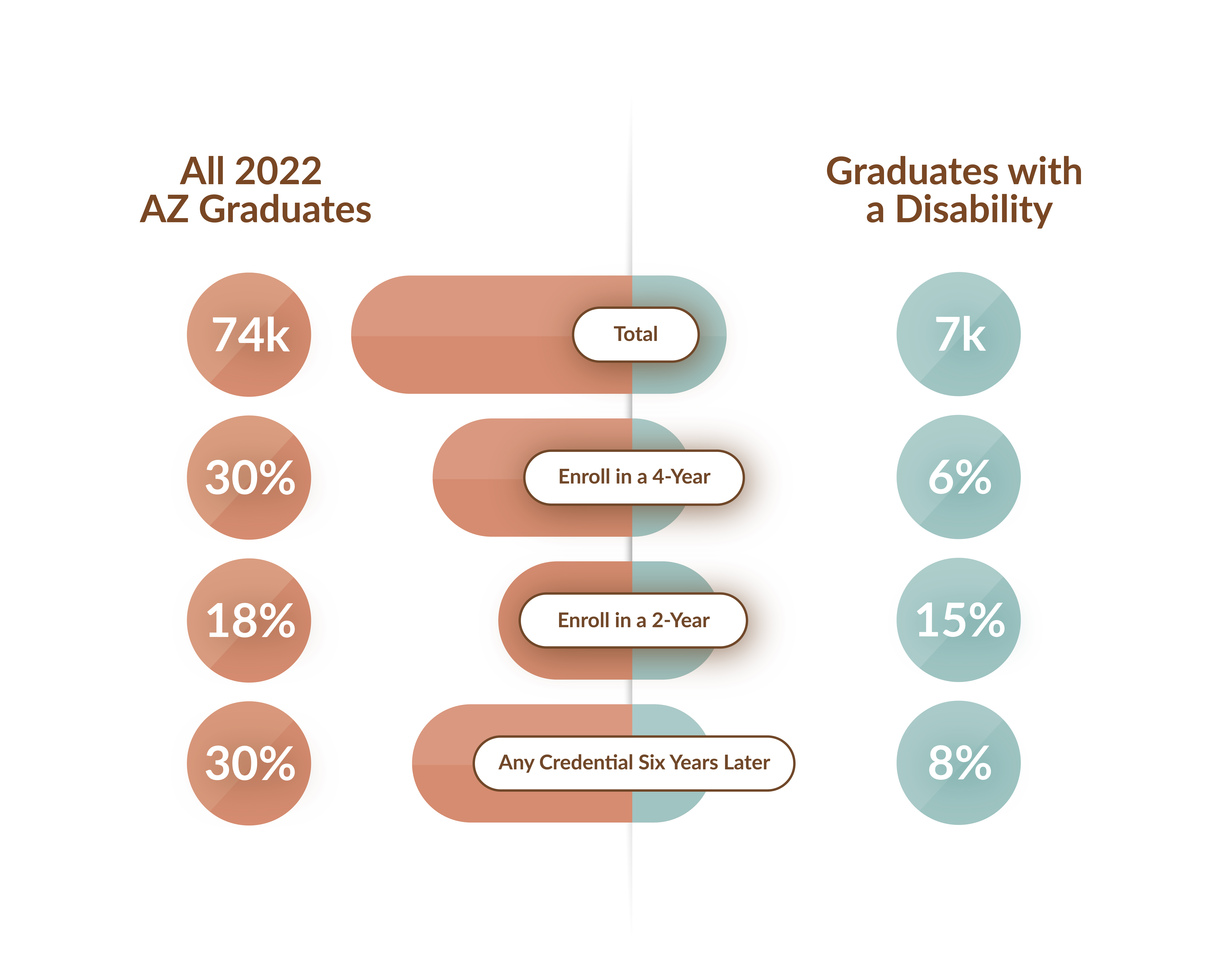
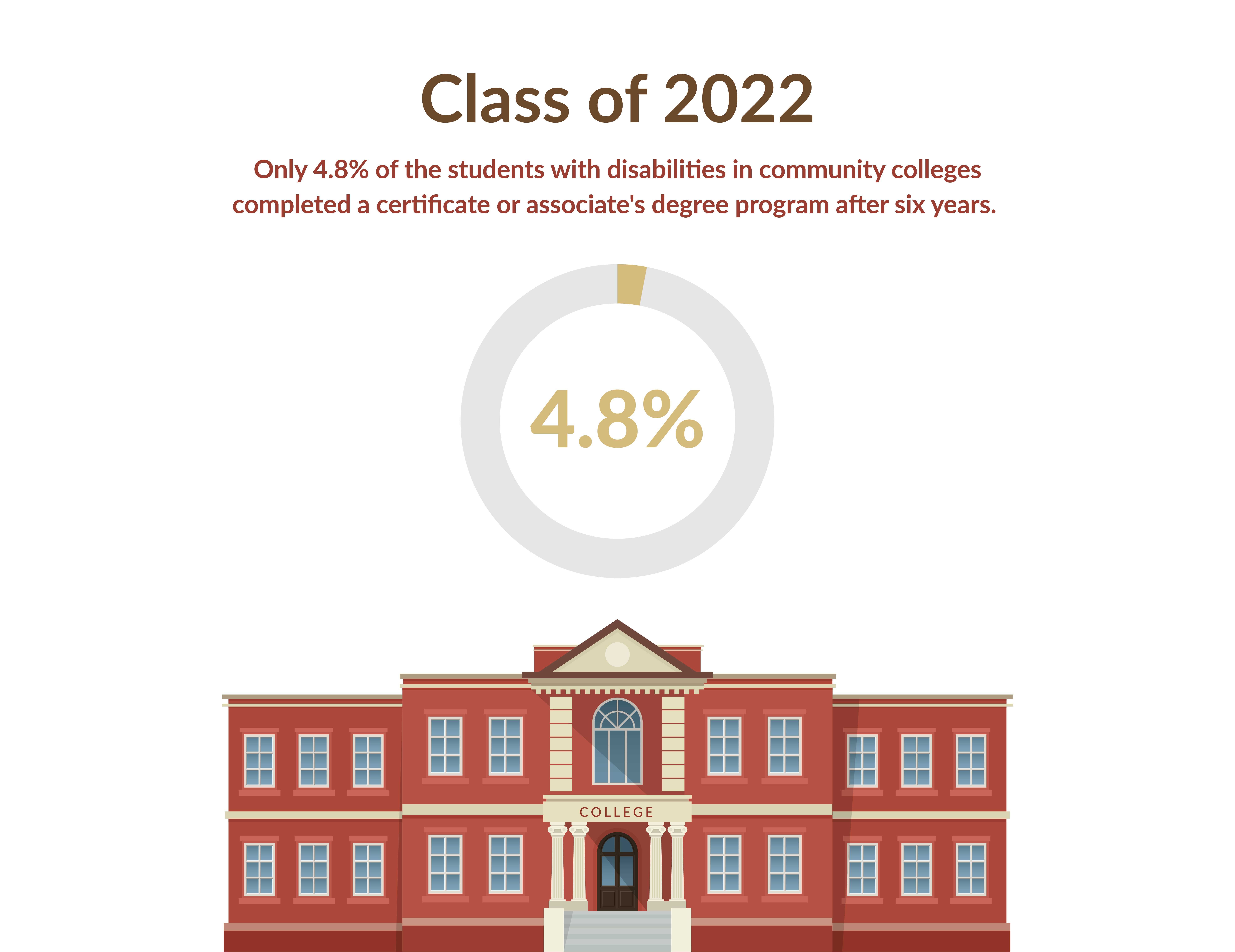
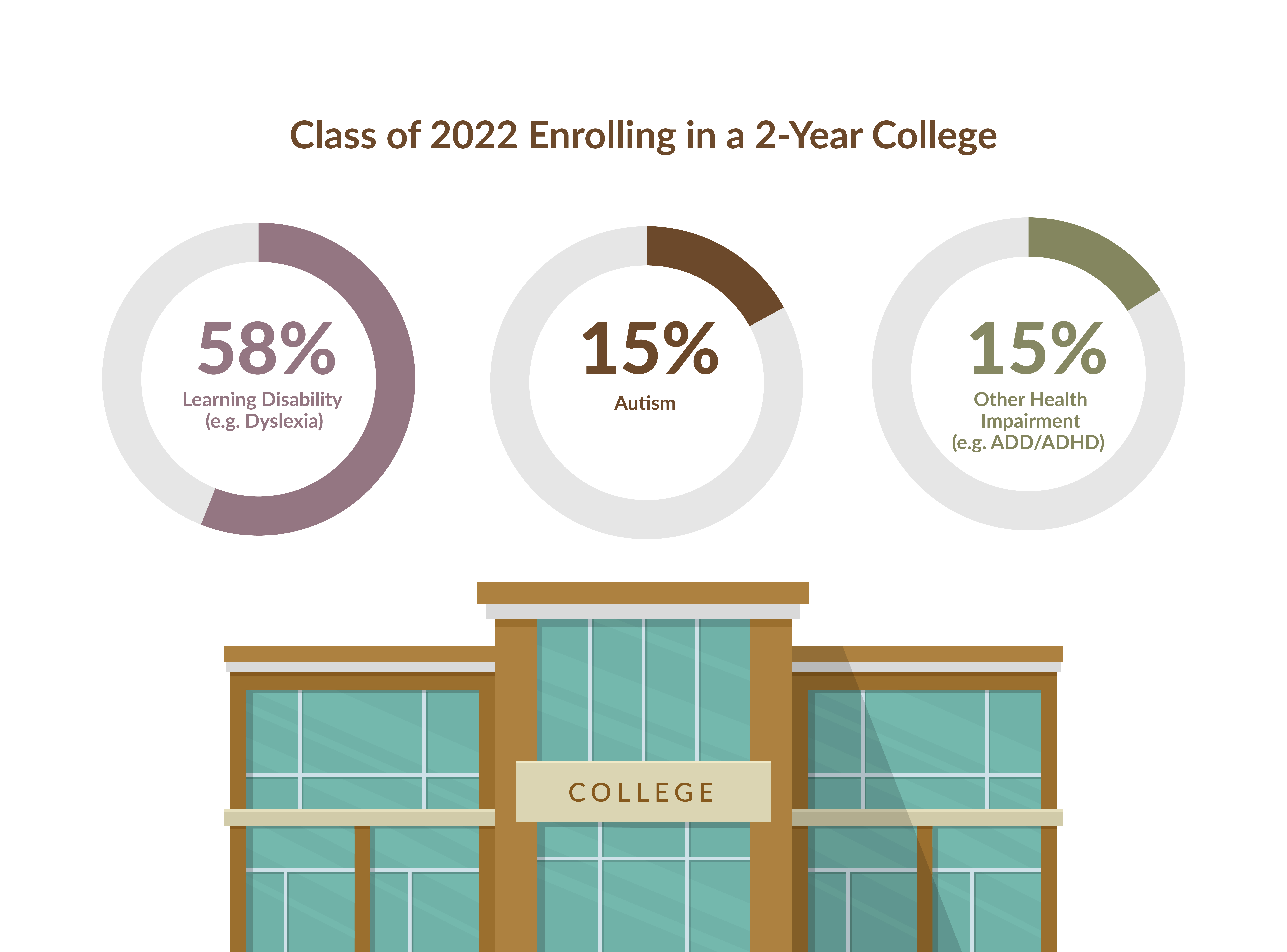
- Community Colleges: Arizona’s community colleges are critical partners in closing achievement gaps. Two-year college programs enroll 15% of high school graduates with disabilities and 18% of all students. But after six years, only 4.8% of students with disabilities in community colleges have received a certificate or associate’s degree, compared with 7.1% of all students.
In short, Arizona students with disabilities enroll in and graduate from postsecondary schools at significantly lower rates than their non-disabled peers. As an education policy expert, I find these statistics concerning. As a parent, I find them alarming.
The Problem of Undisclosed Disabilities
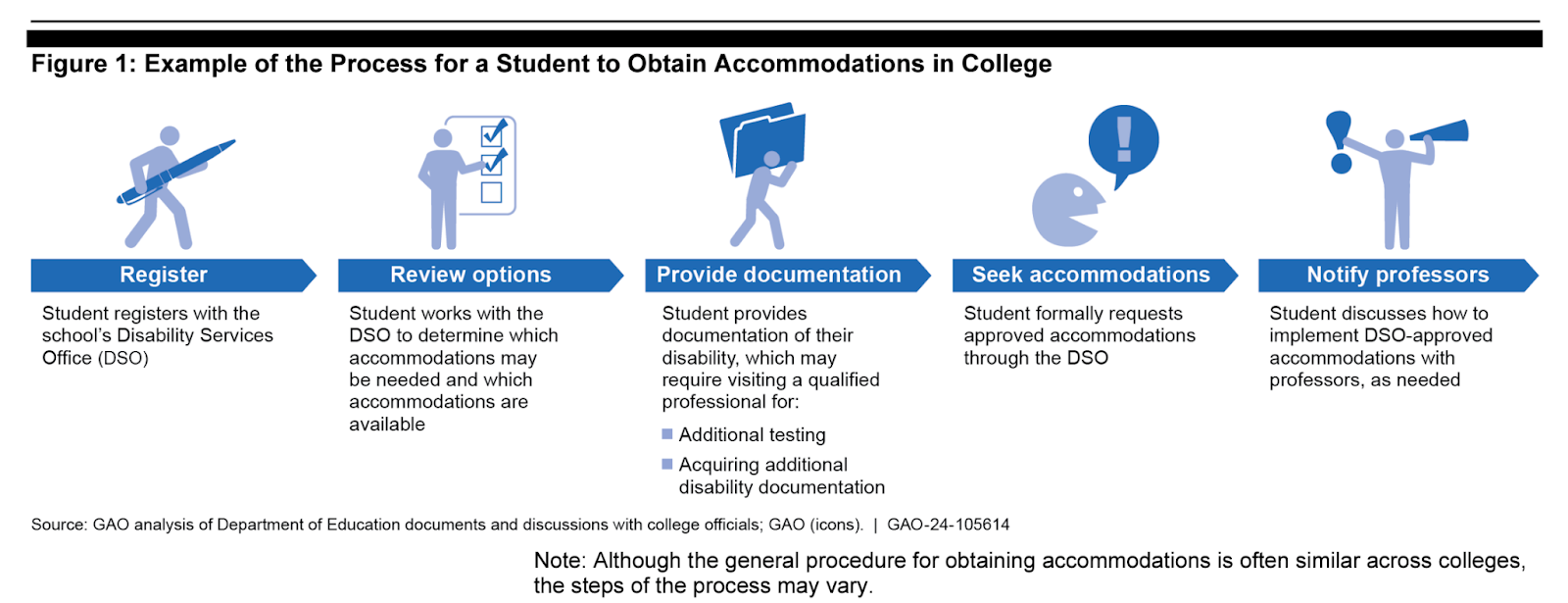
For many students, a failure to thrive in college is likely tied to a change in how accommodations are obtained in higher education.
In K-12 schools, districts are responsible for seeking, finding, and evaluating students with disabilities. In higher education, the responsibility shifts to students.
First, college students must self-disclose and register with the campus disability center. Then, they must negotiate accommodations. (Students aren’t guaranteed the same accommodations they received in elementary or secondary school.) Most students just don’t bother to disclose.
- By the Numbers: In the 2019-20 school year, 21% of undergraduates and 11% of graduate students reported having a disability.6 Yet only about one-third of these students informed their college about their disability.7
This matters because many students (85%) who registered at their disability center receive accommodations. However, since about two-thirds of students don’t disclose their disability, these students aren’t receiving any of the accommodations they had in high school. This makes their transition to college that much harder–and helps explain the higher attrition rates for students with disabilities.
What Arizona Can Do
There are three simple ways Arizona can improve postsecondary learning outcomes for our students with disabilities.
1. Improve Data Collection
Students with disabilities have been historically marginalized and disadvantaged. Arizona must acknowledge this fact and start prioritizing data collection for this student subgroup.
- Data Collection: Institutions of higher education should inventory existing data, identify gaps, and design a plan to enhance data collection and benchmark progress.
- Plans & Goals: Any data collection plan should ensure students with disabilities, as a subgroup, are included in any institutional strategic plans along with goals of improved outcomes.
Improving outcomes for our students with disabilities will help achieve overall institutional goals too!
2. Facilitate Access to Accommodations
Currently, students with disabilities must jump through a series of hoops to acquire necessary accommodations and resources in higher education. Colleges should focus on easing students’ transitions to higher education–and they can begin with disability resource offices.
- Disability Resource Offices: These offices are designed to ensure compliance with the Americans with Disabilities Act. However, federal law is a floor and not a ceiling. Colleges can–and should–shift the focus of disability resource offices from meeting the low bar of reasonable accommodations to one that exceeds requirements and prioritizes student supports. Colleges can pilot innovative ways to streamline these processes.
3. Create Supplemental Programs & Services
Most colleges and universities already provide learning centers and tutoring services to improve retention and graduation rates for students. However, many students with disabilities need more than basic accommodations.
- Increased Supports: Colleges can support students with everything from academics to executive function, employment preparation, and social engagement.
- For example, the Strategic Alternative Learning Techniques (SALT) Center at the University of Arizona provides academic support and services to students with learning and attention challenges. Arizona State University’s Growth, Achievement, Transformation, and Enrichment (GATE) program supports neurodivergent students.
- Programs for Students with Intellectual Disabilities: There are now 300+ programs for students with intellectual disabilities at colleges and universities nationwide. Some are full two or four-year programs resulting in a certificate or credential. Others are partnerships with school districts to provide needed transition programming.
- Arizona’s three programs are at Northern Arizona University, the University of Arizona, and Grand Canyon University. (Arizona State University plans to launch in 2025.) To reach all students with disabilities, Arizona must also engage the community colleges.
- Arizona’s three programs are at Northern Arizona University, the University of Arizona, and Grand Canyon University. (Arizona State University plans to launch in 2025.) To reach all students with disabilities, Arizona must also engage the community colleges.
If Arizona’s higher education leaders take these recommended steps, our children and communities will reap the benefits of accessible and inclusive education for generations.
1 https://nces.ed.gov/fastfacts/display.asp?id=60
2 https://educationforwardarizona.org/everything-to-gain/
3 https://www.dol.gov/agencies/odep/research-evaluation/statistics
4 https://www.advocacyinstitute.org/blog/
5 Arizona’s Board of Regents Postsecondary Attainment Report